
History of Voting: Part 2 of 8
When a doge of Venice died, one of the first people recruited for the election was a boy. Traditionally chosen at random near the palace, he was known as the ballottino. He did not vote. Instead, he drew lots from an urn to help choose the noblemen who would elect the republic's next leader. Using a child selected by chance was meant to make the drawing of lots more impartial.
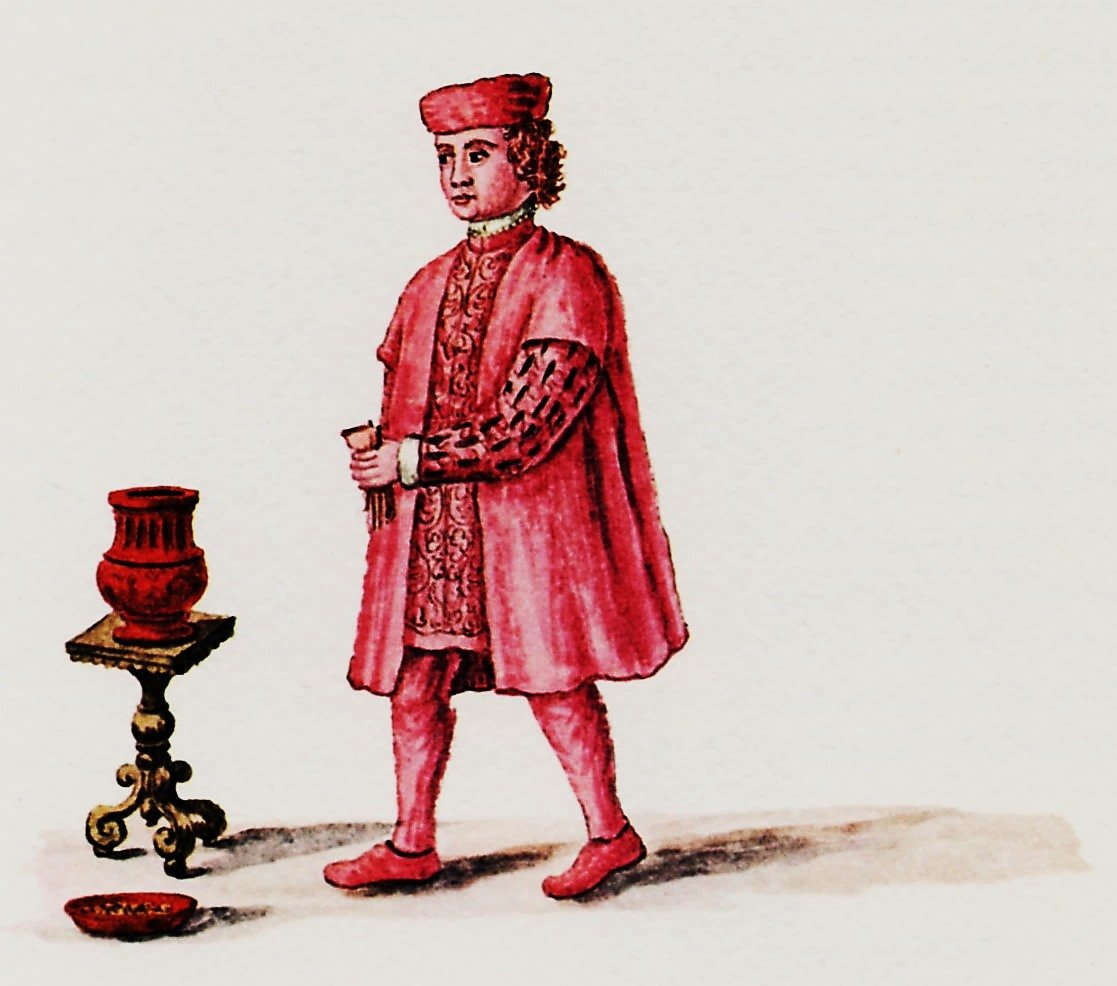
Image: Ballottin del doge by Maspez, via Wikimedia Commons. Licensed under CC0 1.0.
The small balls used in Venetian voting were called ballotte. Our word "ballot" ultimately comes from the Italian ballotta. Over time, it came to describe voting papers and, later, digital ballots too.
The boy was one small safeguard in an elaborate process. Its rules addressed a familiar problem: how to reach a decision when those involved had competing interests and reasons to influence the outcome.
Ten rounds of chance and choice
Venice was an aristocratic republic governed through the Great Council, whose membership grew over the centuries. Powerful families competed for influence over the doge, the elected head of the republic who served for life. In 1268, after nearly a century of changes, Venice settled on a ten-stage election procedure designed to make it harder for any one faction to control the result. It combined drawing lots with successive rounds of voting:
| Stage | Method | Selection |
|---|---|---|
| 1 | Drawing lots | 30 members aged 30 or over were drawn from the Great Council. |
| 2 | Drawing lots | Those 30 were reduced to 9. |
| 3 | Voting | The 9 elected 40, with at least 7 votes required for each person. |
| 4 | Drawing lots | Those 40 were reduced to 12. |
| 5 | Voting | The 12 elected 25, with at least 9 votes required for each person. |
| 6 | Drawing lots | Those 25 were reduced to 9. |
| 7 | Voting | The 9 elected 45, with at least 7 votes required for each person. |
| 8 | Drawing lots | Those 45 were reduced to 11. |
| 9 | Voting | The 11 elected 41, with at least 9 votes required for each person. |
| 10 | Voting | The 41 elected the doge, who needed at least 25 of their votes. |
.](https://images.squarespace-cdn.com/content/v1/68550c56df53085df5e950a7/27d732ce-06ed-4631-b16e-4201bb8a1ef7/Sorting_process_for_the_election_of_the_Doge_of_Venice_-_Sandrart_Jacob_Von_-_1686.jpg)
The Venetian doge election process, illustrated by Jacob von Sandrart (1687). Public domain, via Wikimedia Commons.
The required supermajorities made it difficult for a small faction to appoint all the electors. Repeated draws also made the composition of the next group hard to predict. Venice added further safeguards: members of the same family could not serve together on a committee, and electors were secluded from outside contact while the process continued.
It sounds impossibly slow, yet the entire procedure took about four days on average in the 14th century. Later elections sometimes lasted much longer. The system remained in place until the republic fell in 1797, more than five centuries after its introduction. Political economists and computer scientists still study how its rules limited opportunities for manipulation.
Locked in with a key
At roughly the same time, the Catholic Church faced a different electoral problem: a vote that simply would not end. When Pope Clement IV died in Viterbo, north of Rome, on 29 November 1268, the cardinals gathered to choose his successor. Rival factions could not agree. Months turned into years.
The people of Viterbo eventually lost patience. City authorities confined the cardinals inside the papal palace, restricted their food and even removed part of the roof. The deadlock ended when the cardinals delegated the choice to a committee of six. On 1 September 1271, it selected Tebaldo Visconti, an archdeacon who was then in Acre, in the Holy Land. He took the name Gregory X. The vacancy had lasted about two years and nine months, still the longest papal election on record.
After such a prolonged vacancy, Gregory X wanted to prevent a repeat. At the Second Council of Lyon in 1274, he introduced Ubi periculum ("Where there is danger"), a decree requiring cardinals to remain secluded during a papal election, with progressively stricter meal allowances if they delayed. The word "conclave" comes from the Latin cum clave, meaning "with a key". The rules were later suspended and restored, but the principle of seclusion remains central to papal elections.
The challenge of reaching agreement
The Church had already adopted a supermajority rule. In 1179, the Third Lateran Council required a candidate to receive two-thirds of the cardinals' votes to become pope. The threshold was intended to prevent rival claimants and divisions within the Church. But Viterbo showed the trade-off: a rule that encourages broad agreement can also prolong a deadlock.
Venice and the Church shared a concern about legitimacy. Both used supermajorities and seclusion, but their procedures addressed different aspects of the challenge:
Venice combined chance and voting to make it harder for one family or faction to control who chose the doge.
The Church paired its two-thirds threshold with conclave rules intended to limit outside interference and discourage prolonged delay.
Both designed safeguards around human behaviour, recognising that competing interests and outside pressure could shape a decision.
What it means today
Medieval rule-makers knew that an election's credibility depended on its procedure. Who gets to take part? What level of agreement is enough? How do you prevent interference or resolve a deadlock?
Those questions still matter for AGMs, board elections and member votes. An organisation's constitution and voting rules determine who is eligible, how votes are counted, and what approval threshold applies. Electify helps organisations put those requirements into practice through secure online ballots, voter eligibility controls, proxy voting where permitted, and a clear audit record of the result.
The lesson from Venice and Viterbo is that every safeguard involves choices. A higher threshold can encourage wider agreement, but make a decision harder to reach. Restricting outside contact can protect deliberation, but cannot guarantee consensus. A credible process depends on understanding what each rule is intended to achieve, and how the rules work together when people disagree.
If you are preparing an AGM, a special resolution or a member election, we would be happy to discuss how Electify can support your process. Visit electify.vote or email support@electify.vote.
Next in the series: the first shareholder meetings and the long-running debate over whether each investor should have one vote or one vote per share.
Sources for episode 2: Molinari (2020) · Martin (2018), NYU Law Review · Oxford Learner's Dictionaries, "ballot" · Vatican News (2025), Gregory X and the Viterbo election · Third Lateran Council (1179), Canon 1

